
Cue the Change: Making Good Habits Obvious
Tools: Articulate Rise, HeyGen, Adobe Illustrator, Adobe Acrobat, ChatGPT
Overview
For this project, I wanted to replicate some real-world constraints I often encounter as an instructional designer, so I designed a short learning experience based on far more source content than a course can hold. I used a public source, an excerpt from James Clear’s Atomic Habits, so the project could be shareable. My central design question was: can I build a course around evidence-based instructional design techniques like retrieval practice and reflection using only Rise's built-in blocks, without custom Storyline interactions?
Analyze
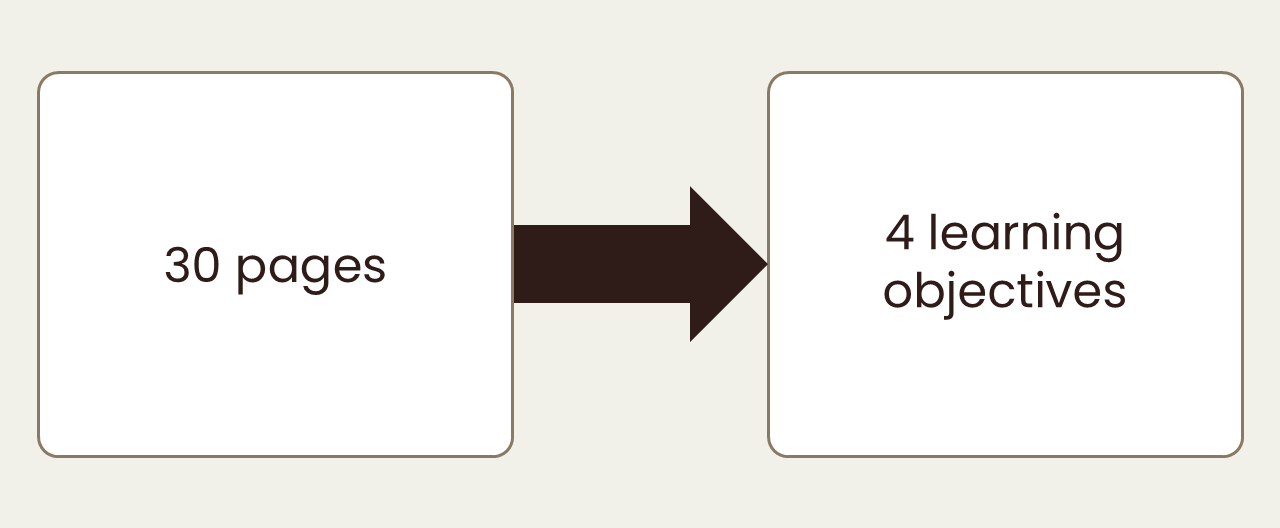
I deliberately chose to focus on the "Cue" portion of the Atomic Habits’ four-step habit-formation process as a manageable unit that could later become one part of a series, with additional courses covering the other three steps. From there, I took the 30-page source and distilled it into four key learning objectives on cues and their role in habit formation. This parallels the work I typically do in my role, as I often start with much more source material than can reasonably fit into an on-demand course. When possible, I typically organize asynchronous, self-paced learning around a process or framework and chunk modules or lessons into steps within that organizing structure. I've found that linear structure helps scaffold learning in self-paced formats.
Design
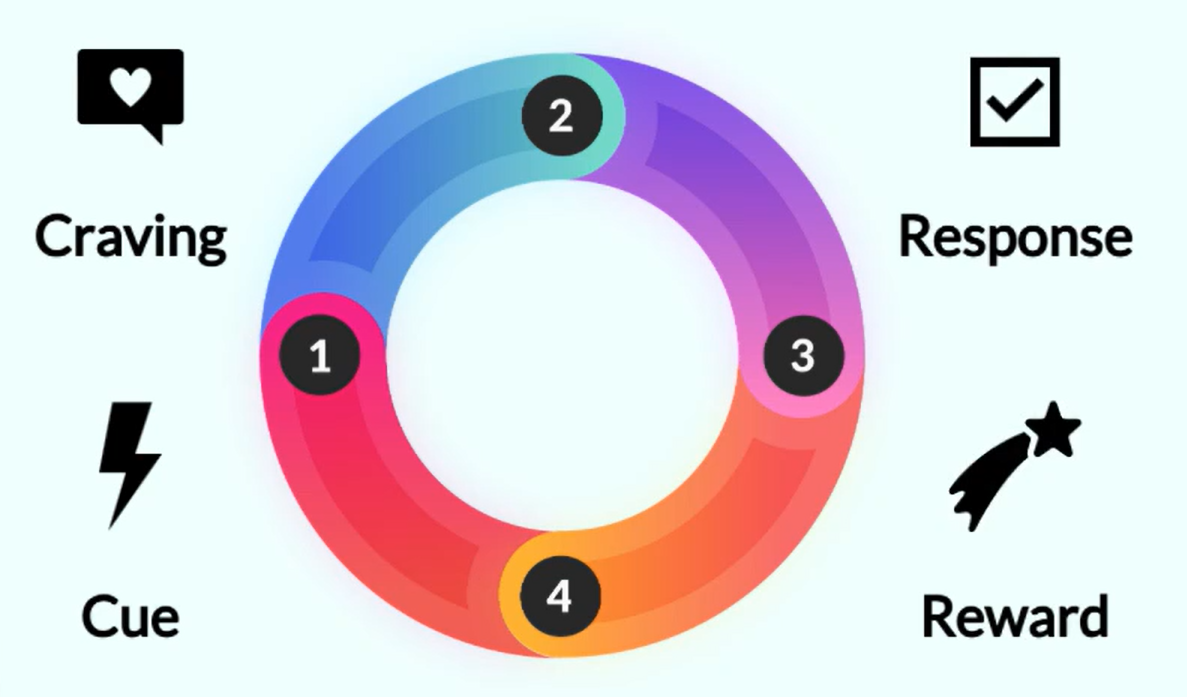
I designed a custom process graphic to introduce learners to the four-step habit-formation process. I included this graphic in a brief video introduction that situated learners within the process and focused their attention on the subject of this course: cues. Incorporating this video at the beginning of the course served two purposes. First, it leveraged multimedia to capture learners' attention; the use of a HeyGen video avatar also boosted effort and engagement by fostering a social connection.
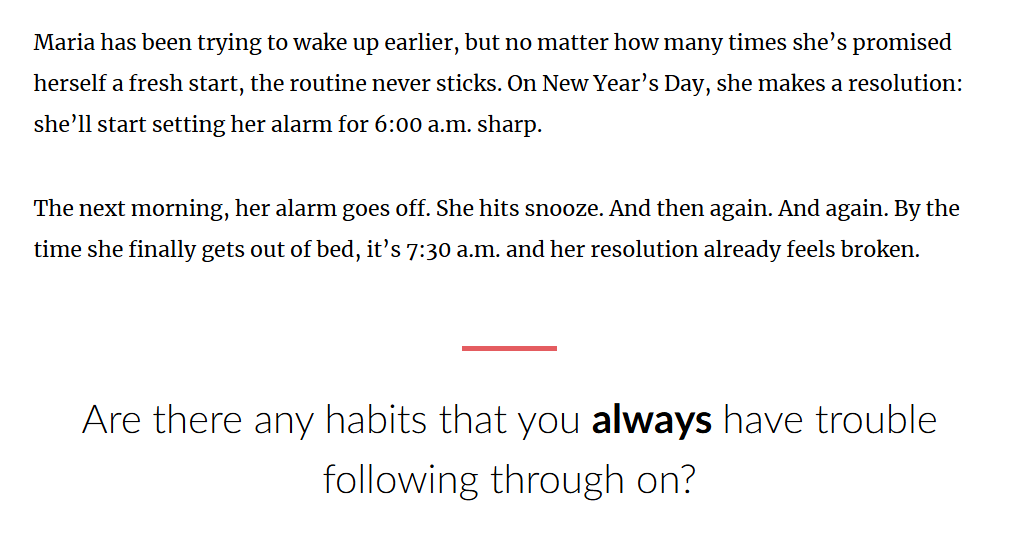
Working within my constraint to build the course entirely within Rise's native blocks, I settled on a repeatable structure to sequence each lesson. I'd start with a hook to grab attention, followed by a reflection question to build relevance before introducing any content.
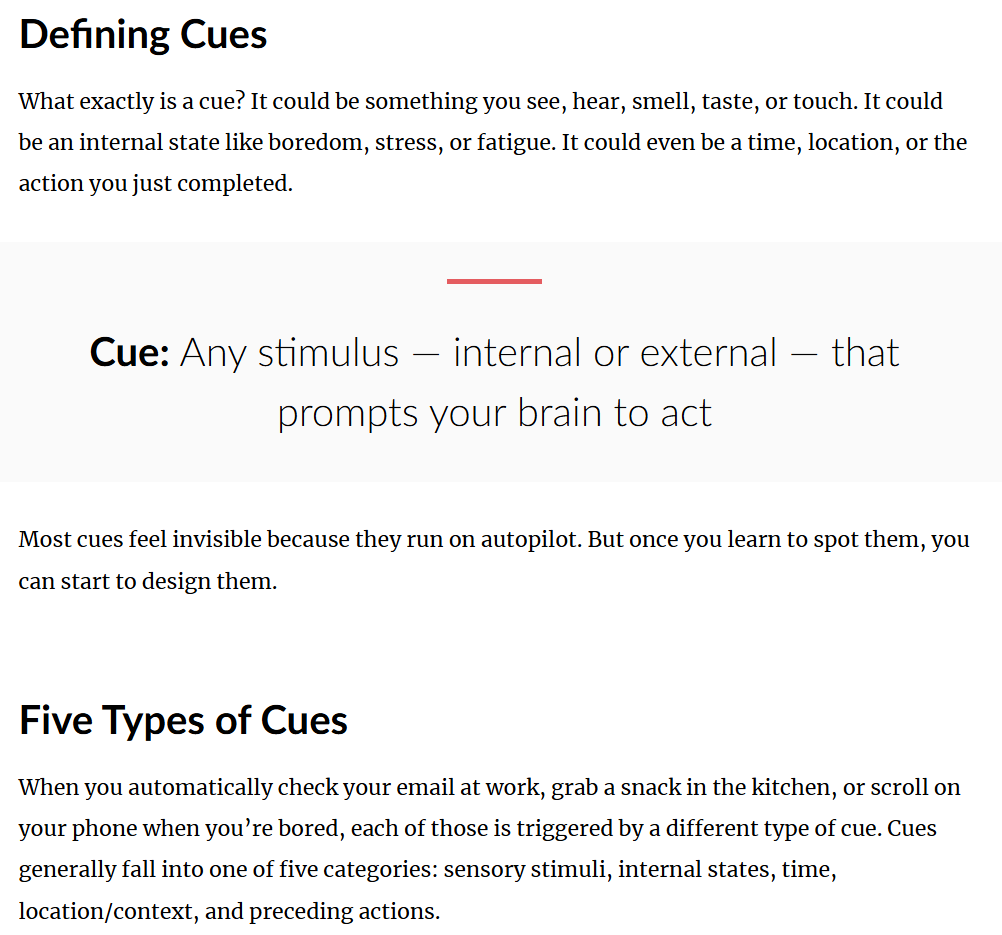
Next, I'd ground the content in direct instruction: a definition followed by a process, framework, or set of elements.
Then, I'd include a multiple-choice knowledge check for practice within guardrails.
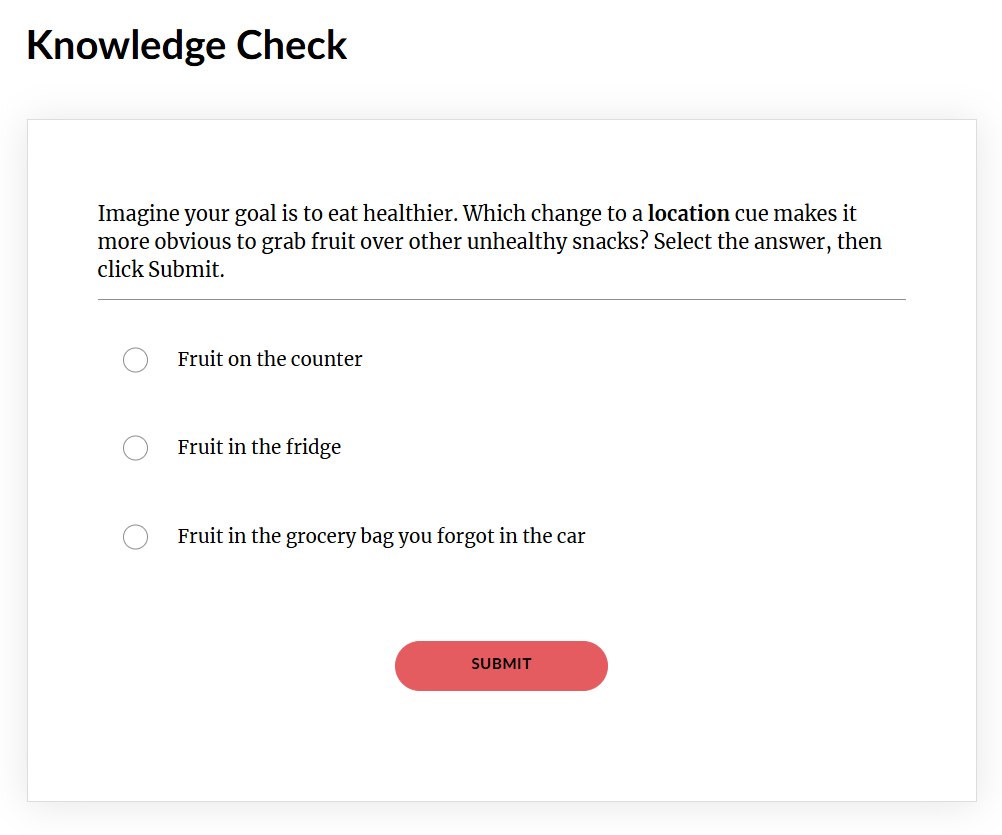
This controlled step sets the learner up for the real-world application activity and guides them from supported practice to independent practice.
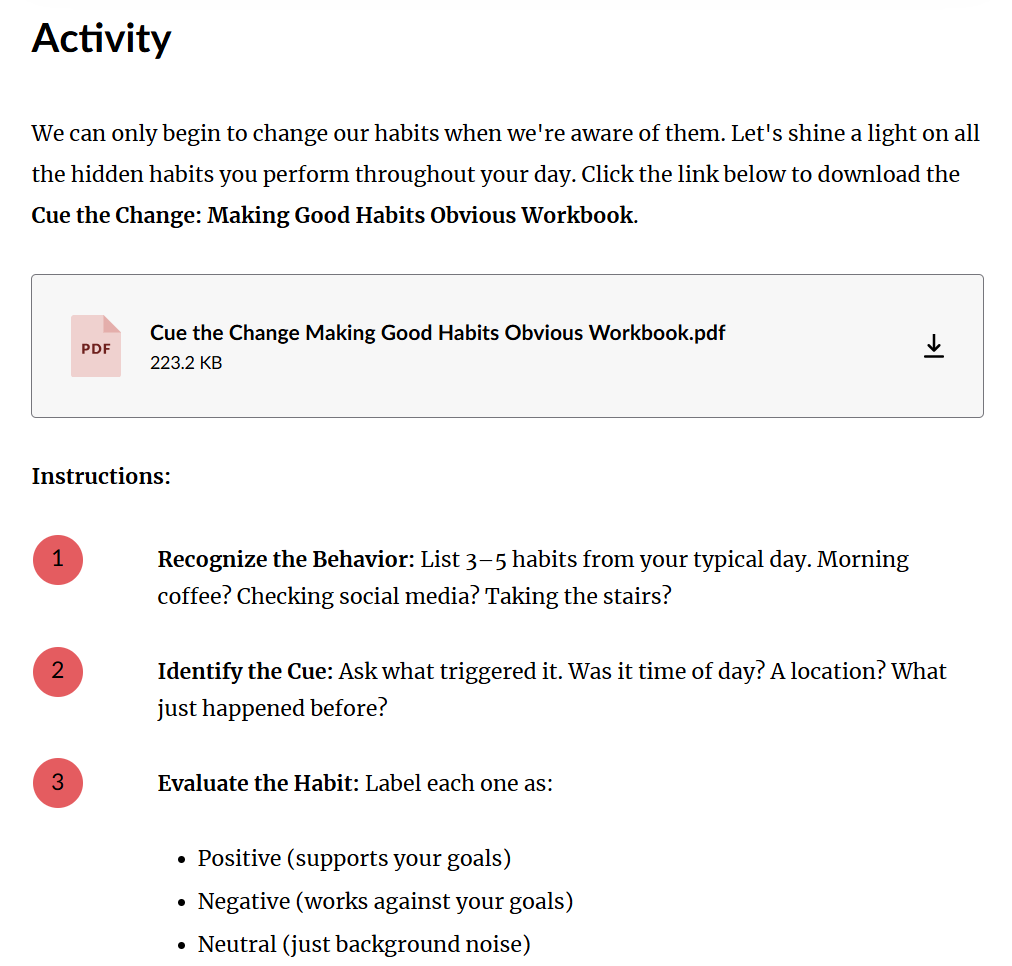
Each lesson is bookended by reflection at the beginning and authentic transfer at the end, reinforcing the content's relevance and supporting application.
Develop
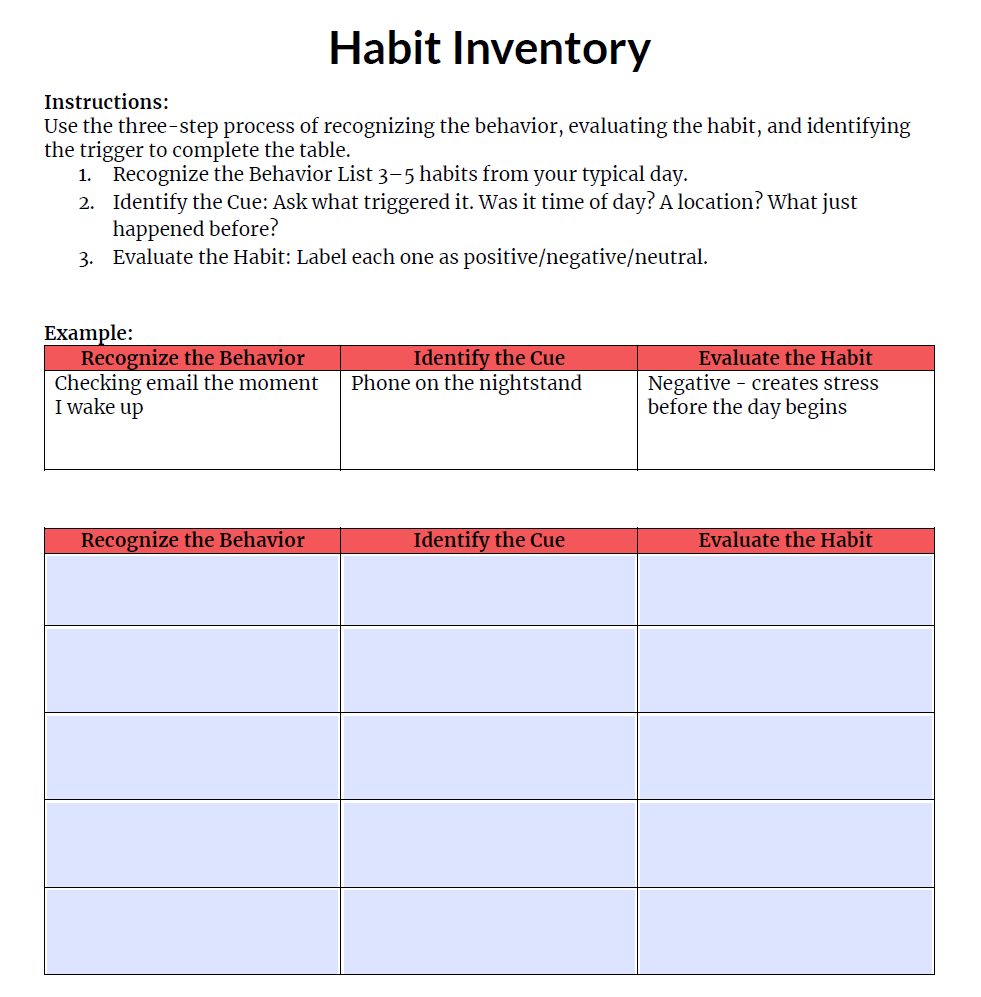
After outlining the video and the course, I used ChatGPT to draft a script from my outline, then edited for voice. Looking back, I'd edit the script more heavily, as some areas read as AI-generated. Next, I sourced visuals from Envato, built the course in Rise, and created the video in HeyGen. I also created a workbook in Acrobat to serve as a companion resource. I reviewed the course for quality and refined transitions so each topic connected clearly to the one before it.
Result
Ultimately, this project shows that evidence-based techniques can work well in Rise, even without custom Storyline interactions or JavaScript. It also establishes a repeatable course template, as this structure could extend to each remaining step in the habit-formation process. As a next step, I'd pilot this course with a small group of learners to collect feedback and further iterate on the design.