AI’s Role in Course Production
Some details in this post have been adapted to protect confidentiality.
The Guiding Principle
Whether you love it or hate it, AI isn’t going anywhere – and in instructional design, it is everywhere. There are certainly risks and ethical considerations, but there are many places where AI can support and accelerate course production.
In this fast changing environment, I found myself needing a guiding principle to inform where AI belongs in the course design and development process so that I could mitigate risk and maintain instructional quality. As I began developing AI-assisted workflows, I started operating around the following standard:
AI can perform first-pass drafts or pattern detection, but humans need to make instructional, accessibility, quality, and approval decisions.
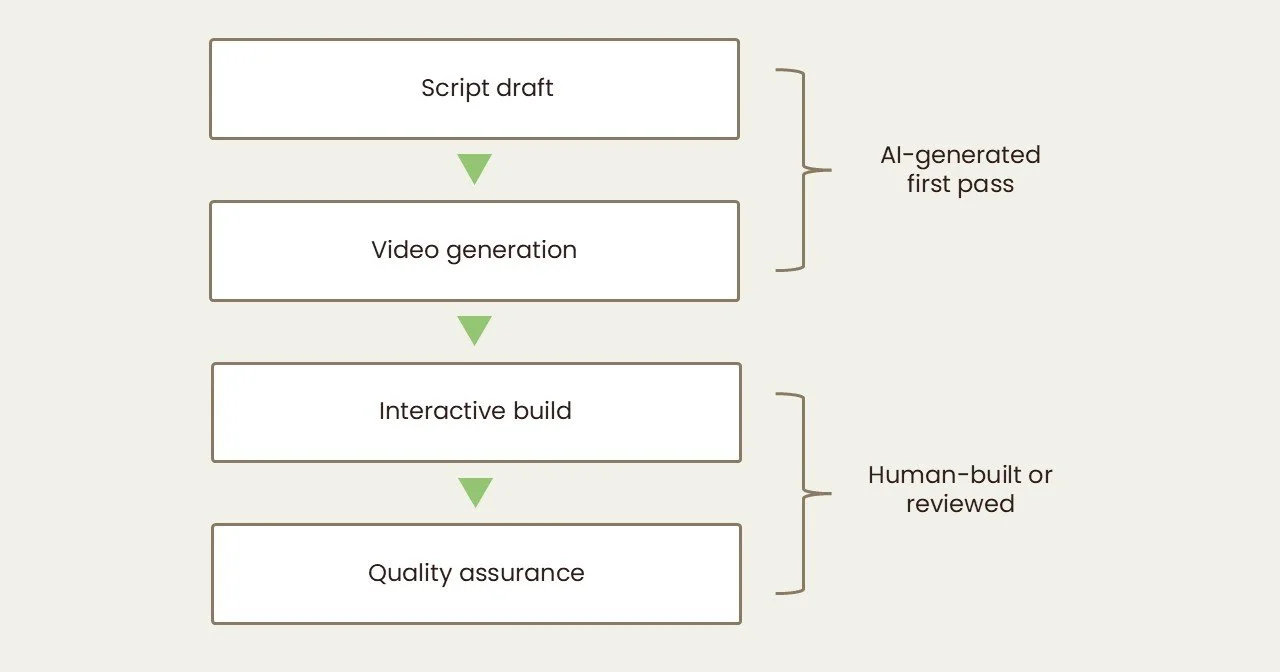
As I experimented with AI-assisted course design and development, I found that the trade-offs between quality and efficiency were more acceptable at certain points in the production lifecycle. I mapped AI involvement according to the level of instructional and production risk at each stage:
Initial input must be human
AI takes a first pass at generation or pattern detection
Humans make design decisions (e.g., creating activities and assessments).
Human reviewers conduct quality assurance reviews
This division of responsibilities allows AI to accelerate production without replacing instructional decision-making. It is tool-agnostic and can apply to a number of workflows in an instructional designer’s day-to-day life.
Guardrails
After a few repetitions of the AI-powered workflow, I added a few key guardrails:
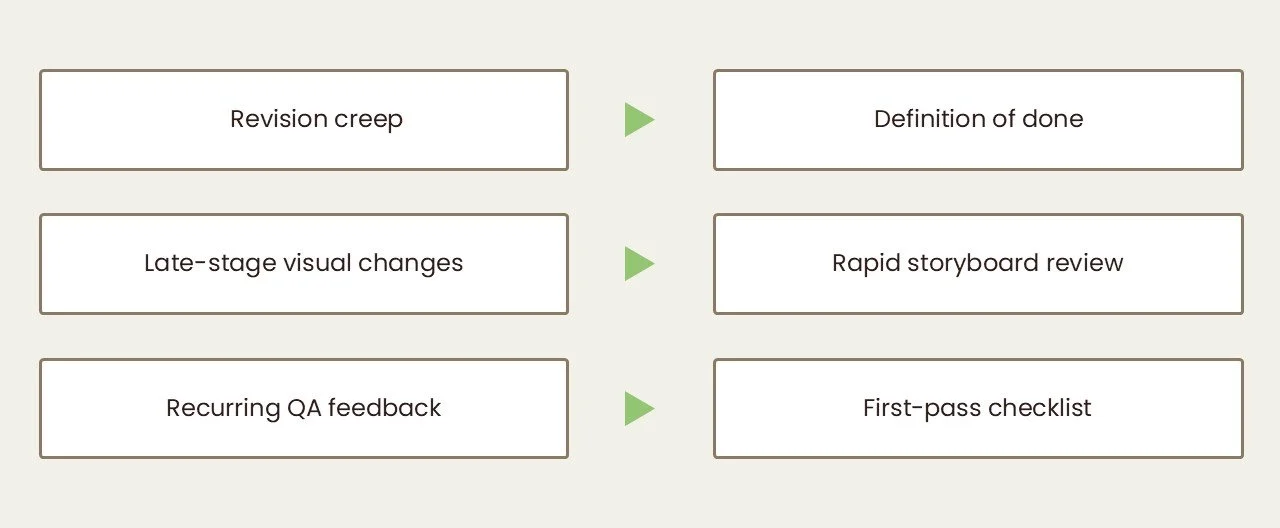
Definition of Done: The human effort involved in steps like re-recording audio creates a natural friction with the number of script revisions that are possible. Without that friction, script approvals run the risk of feeling more flexible, and stakeholders could begin treating scripts as editable, which encourages minor edits and adds time without significantly changing the learner experience. To reduce unnecessary revisions, I build a Definition of Done into the documentation so that reviewers and designers share expectations about which revision requests are acceptable at each round of review.
Rapid Storyboard Review: Some design decisions are cheap to change early and expensive to change once production is underway. A choice that surfaces in the first round of QA — after development has already moved forward on an earlier decision — can trigger a time-consuming cascade of rework. Though rapid development is central to an AI-powered workflow, I decided to add an early checkpoint to solicit stakeholder sign-off on key design decisions before the first full draft is built.
Workflow Improvements: New processes often evolve. To streamline this, I used AI to review a sample of past QA feedback and identify the recurring, catchable issues. That analysis became a starting point for a first-pass checklist the designer runs before submitting the course for the first round of QA review. This meaningfully reduced the volume of feedback and helped designers become familiar with “watch-outs” in this new workflow.
This guiding principle and guardrails provide a repeatable approach to AI-powered course development. It establishes clear decision points, review expectations, and quality standards that can be applied consistently across projects and is designed to scale as the team grows.
Next Steps
I have begun to refine this workflow, but I intend to make this process continuous by:
Reviewing QA feedback on a regular cadence to determine when standards and processes need to be adjusted
Comparing issues across projects to determine where changes to standards need to be made
Leveraging AI for a script review for accessibility and readability