Project Breakdown: Designing Learning When the Format Is Predetermined
Some details in this post have been adapted to protect confidentiality.
Learning designers often work within fixed formats to maintain consistency across an existing portfolio. Much of an instructional designer's job is navigating those constraints while still building the most effective learning experience to improve performance outcomes.
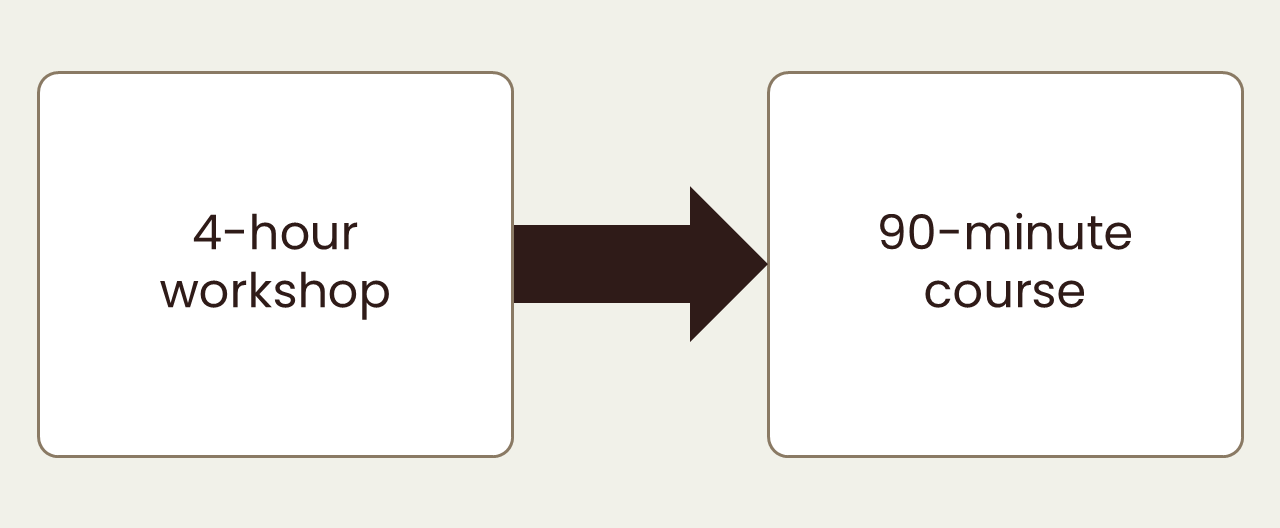
In a recent project, I started with content from a live four-hour workshop and partnered with a subject matter expert (SME) to develop an interactive and much shorter eLearning course on SEO. Early in projects like this, I often hear some version of the same suggestion: just record the workshop and turn it into an on-demand course. That assumption gave us a useful starting point to clarify what the course actually needed to accomplish, what it should look like, and why translating a live session into eLearning takes more than hitting "record." Once we were aligned on our process, we focused on creating a learner-centered experience.
Learning Objective
First, we focused on the learner behavior that needed to change. We wanted learners to be able to identify and prioritize target audience search terms and integrate them into their content to improve how that content performed in search results. After we clarified the learning objective, we evaluated what content was essential and what was not essential.
Essential Content and Design Decisions
With this performance objective in mind, I worked with the SME to review the content and determine the most essential knowledge to include in our course. We eliminated lengthy context and decided to keep only the background necessary for learners to begin identifying target search terms: a definition of SEO and an explanation of how search results are typically structured. The workshop had covered how this varies across different search engines, but to manage cognitive load, we scoped the course to a single, representative example.
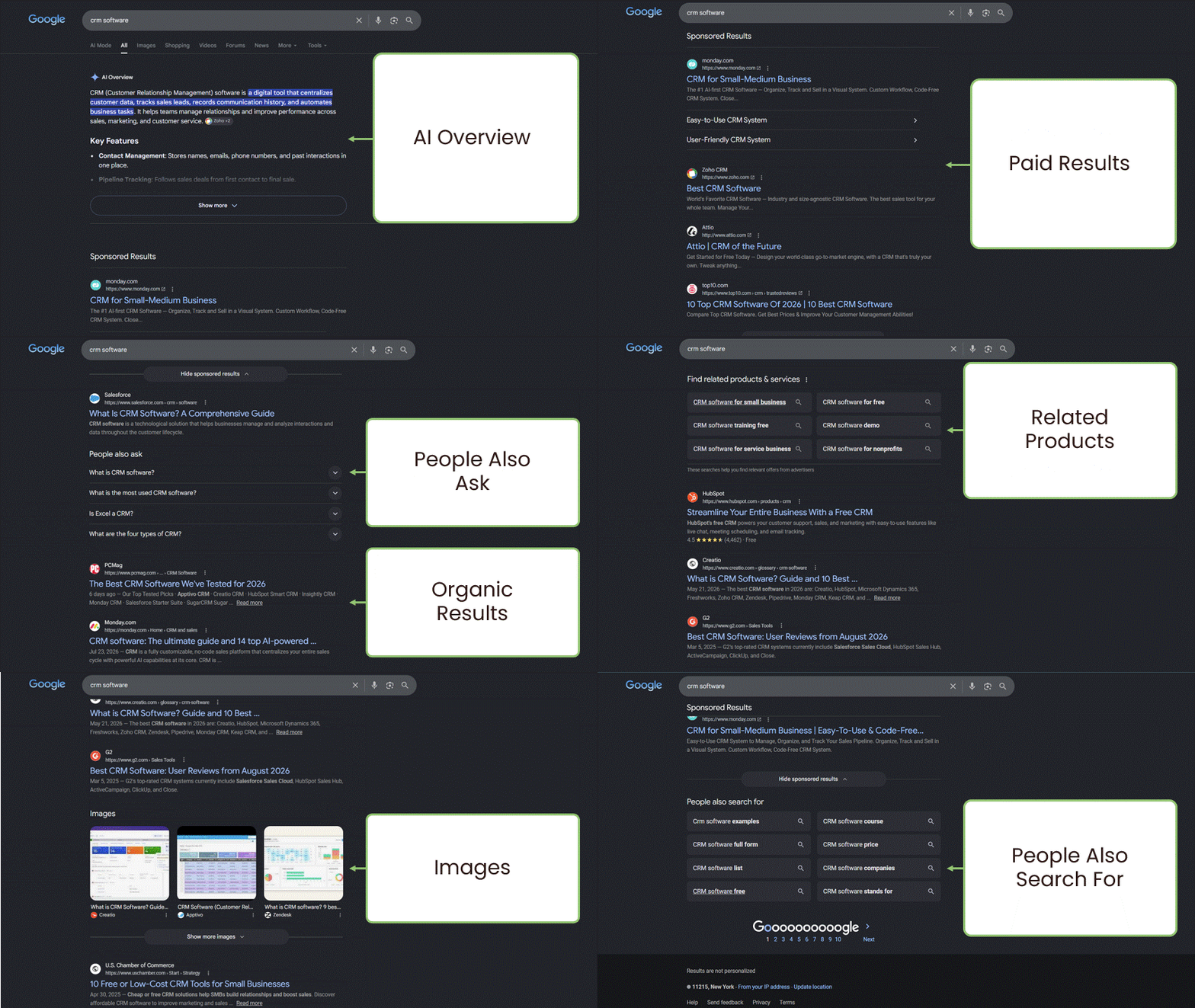
We also decided to focus on one accessible, widely available keyword research tool rather than surveying the broader landscape of options. Since our target audience was junior to mid-level learners from a variety of organizations with access to a variety of technologies, a free, accessible tool stood out as the most direct way to teach real search behavior. It also let us build foundational skills without overwhelming learners, so they could later apply those skills to whatever platforms their companies used. By narrowing to one tool and one representative example, we were able to prioritize building transferable skills through a job aid and aligned opportunities for practice.
Build for Transfer
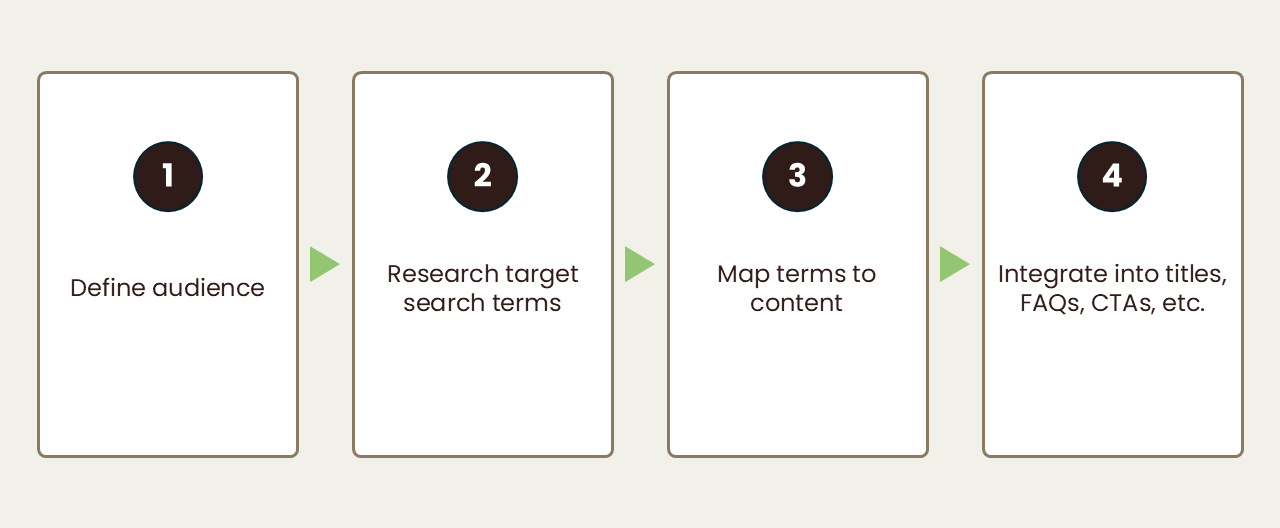
Working with the SME, we built the course to emphasize learning transfer by focusing on helping learners create an SEO content development plan they could apply directly in their own work. The course was structured around a repeatable process that helped learners identify their audience's search terms and incorporate them into their content marketing. This ensures that learners can transfer the process to their own work.
Examples and Practice
As the content guided the learner through each step of the process, we provided examples and immediate opportunities to apply the steps by completing their own plan. This allowed learners to practice the real behavior we want them to perform back on the job.
Instead of filling the runtime with content, I worked with my SME to provide the learner with enough context to be able to learn how to perform the task, a job aid for them to take away from the course, multiple examples, and safe opportunities for practice. It may take more time than recording a workshop, but thoughtful eLearning instructional design ensures that learners stay engaged and acquire the skills they need to perform their jobs better.